Gus Hollloway Seeks Advice On Roommate Narrating Every Cooking Step Like A Nature Documentary
January 28, 2026
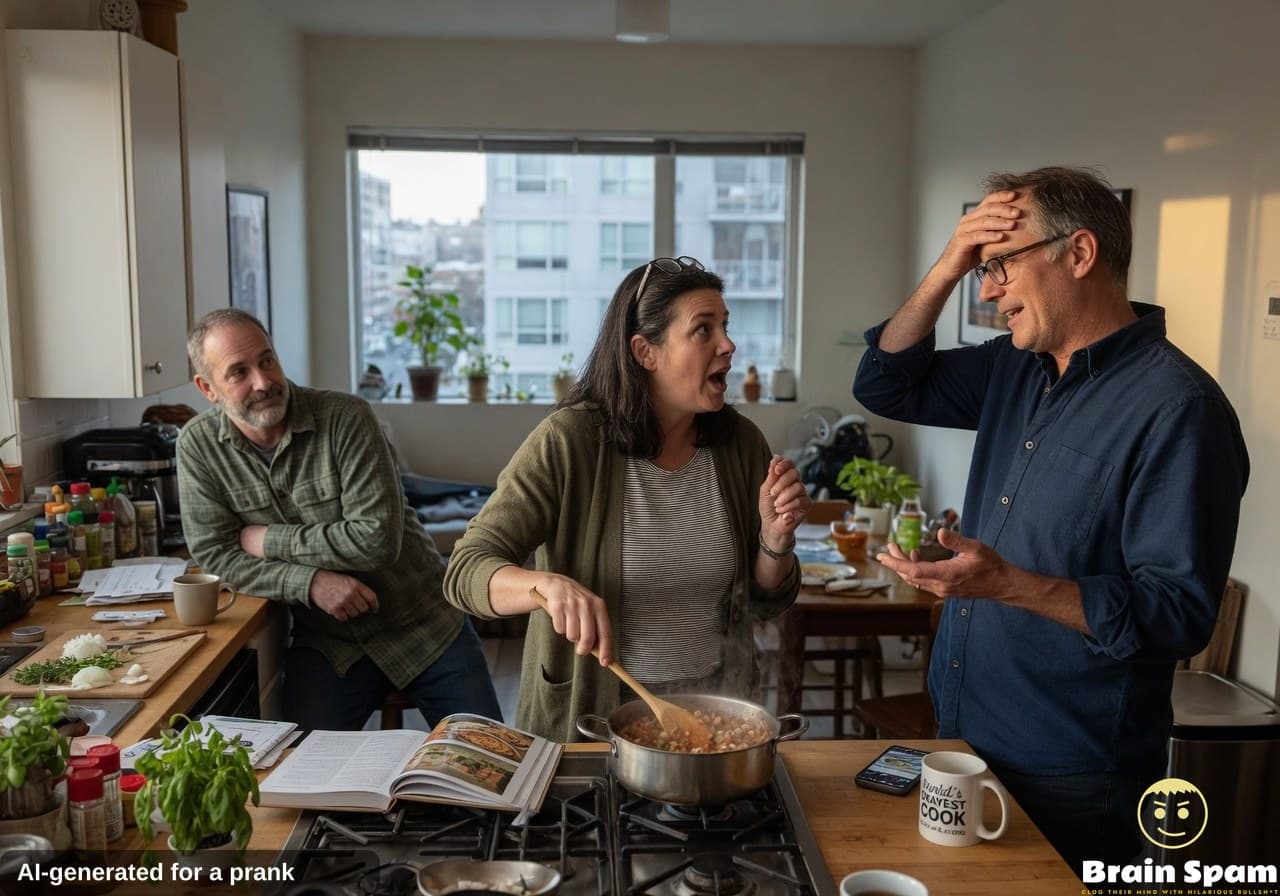
Gus Hollloway recently contacted an advice column to discuss ongoing tensions in his shared living space after his roommate began treating routine meal preparation as the subject of an extended wildlife broadcast. The situation started innocently enough with whispered observations about boiling water but quickly expanded into detailed commentary on the migration patterns of vegetables across the countertop and the dramatic struggles of spices entering their final habitat. Family members who stopped by for visits found themselves seated in the living room listening to extended monologues about the social hierarchy among different types of pasta while dinner simmered nearby. Local building management received multiple noise complaints describing how the narration carried through thin walls and disrupted evening routines for adjacent units. Over time the practice extended beyond the kitchen to include commentary on the refrigerator light activating and the complex social dynamics of leftover containers competing for shelf space.
The Daily Ritual
Each evening the roommate positions himself at the counter and begins a measured commentary that follows every motion with the cadence of a seasoned field observer tracking rare species through remote terrain. Observers noted how the narration pauses dramatically during moments of high tension such as when oil reaches the precise temperature for optimal searing or when a sauce achieves the correct consistency after prolonged simmering. The descriptions often incorporate invented behavioral patterns attributing emotions and territorial instincts to individual ingredients as they interact within the pan. Residents on the same floor reported adjusting their own schedules to avoid passing the shared hallway during peak cooking hours when the volume of the narration tends to increase with the addition of more components. The routine has persisted for several months without any apparent awareness that the behavior might register as unusual to others sharing the same space.
Unexpected Interruptions
Attempts to interrupt the narration have produced mixed results including brief pauses followed by resumed commentary that incorporates the interruption itself as an external environmental factor affecting the cooking process. Neighbors have described gathering in the hallway to listen in stunned silence as the voice details the journey of a single onion from whole form to translucent state with the same reverence usually reserved for endangered species in remote habitats. The practice has begun to influence other aspects of household life including grocery shopping trips where similar narration styles emerge while selecting produce in the aisles. Building maintenance crews arrived on one occasion to address a reported appliance issue only to find themselves standing awkwardly while the narration shifted focus to their presence as migratory workers entering the ecosystem. Efforts to redirect the activity toward more conventional conversation have consistently failed to alter the established pattern.
Broader Household Impact
The ongoing narration has created ripple effects throughout the living arrangement including changes to meal planning that now account for extended timelines required to accommodate the full commentary cycle. Shared spaces have taken on an altered atmosphere where silence during non cooking hours feels unusually pronounced after the detailed audio logs of previous evenings. Individuals who share the apartment have reported developing strategies such as wearing headphones or scheduling their own activities to coincide with cooking periods in an effort to minimize exposure. The situation has prompted discussions among other residents about whether similar behaviors exist in neighboring buildings or if this represents an isolated case of kitchen based documentation. Over several weeks the cumulative effect has transformed what began as a minor eccentricity into a defining feature of daily life in the unit.
Future Considerations
Gus Hollloway has expressed interest in exploring options that might gently redirect the narration toward more standard household communication without creating additional tension in the shared environment. Suggestions from various sources have included introducing competing audio sources or attempting to frame cooking as a collaborative rather than observational activity. The matter remains unresolved as the practice continues without signs of diminishing intensity or frequency. Long term residents in the building have begun to view the situation as a permanent fixture that requires adaptation rather than resolution at this stage. The entire episode highlights how seemingly small behavioral shifts can expand to occupy significant portions of shared living dynamics over time.
Related Searches
🎉Gotcha!
This satirical story was created by a BrainSpam user using the BrainSpam platform — a tool for generating fictional and humorous stories for entertainment.
Create your own at BrainSpam.com
Disclaimer: This article was created by a user of BrainSpam and is intended solely for satire, parody, and entertainment purposes.
BrainSpam is a platform that allows users to create fictional, humorous, or exaggerated stories about real or imaginary people and events.
The content above is not factual reporting and should not be interpreted as statements of fact. It reflects the creative expression of the individual user who created it, not the views of BrainSpam or its operators.
Real persons may be referenced as part of parody or commentary. Any resemblance to actual events or individuals is used in a satirical or fictional context.
BrainSpam does not verify or endorse user-generated content published on this platform.
More from AdviceColumns.com
Lifestyle
BREAKING EXCLUSIVE: SAMMY LIDDELL'S ICE LABELING QUESTION ROCKS THE OFFICE FRIDGE WORLD
Lifestyle
BREAKING EXCLUSIVE: HANK DOVERLY BEGS FOR ADVICE AFTER ROOMMATE TURNS EVERY MEAL INTO A NATURE DOCUMENTARY DISASTER - YOU WON'T BELIEVE THE CHAOS
Lifestyle
SHOCKING EXCLUSIVE: BENNETT OJO'S ACCIDENTAL TRIPLE BOOK CLUB JOIN SPARKS NEIGHBORHOOD PANIC YOU WON'T BELIEVE
Lifestyle
Florence Okeke Sparks Warm Reflections On Lasting Digital Bonds
Lifestyle
Yusuf Cardenas Thoughtful Query Inspires Community Warmth
Lifestyle